* All product/brand names, logos, and trademarks are property of their respective owners.
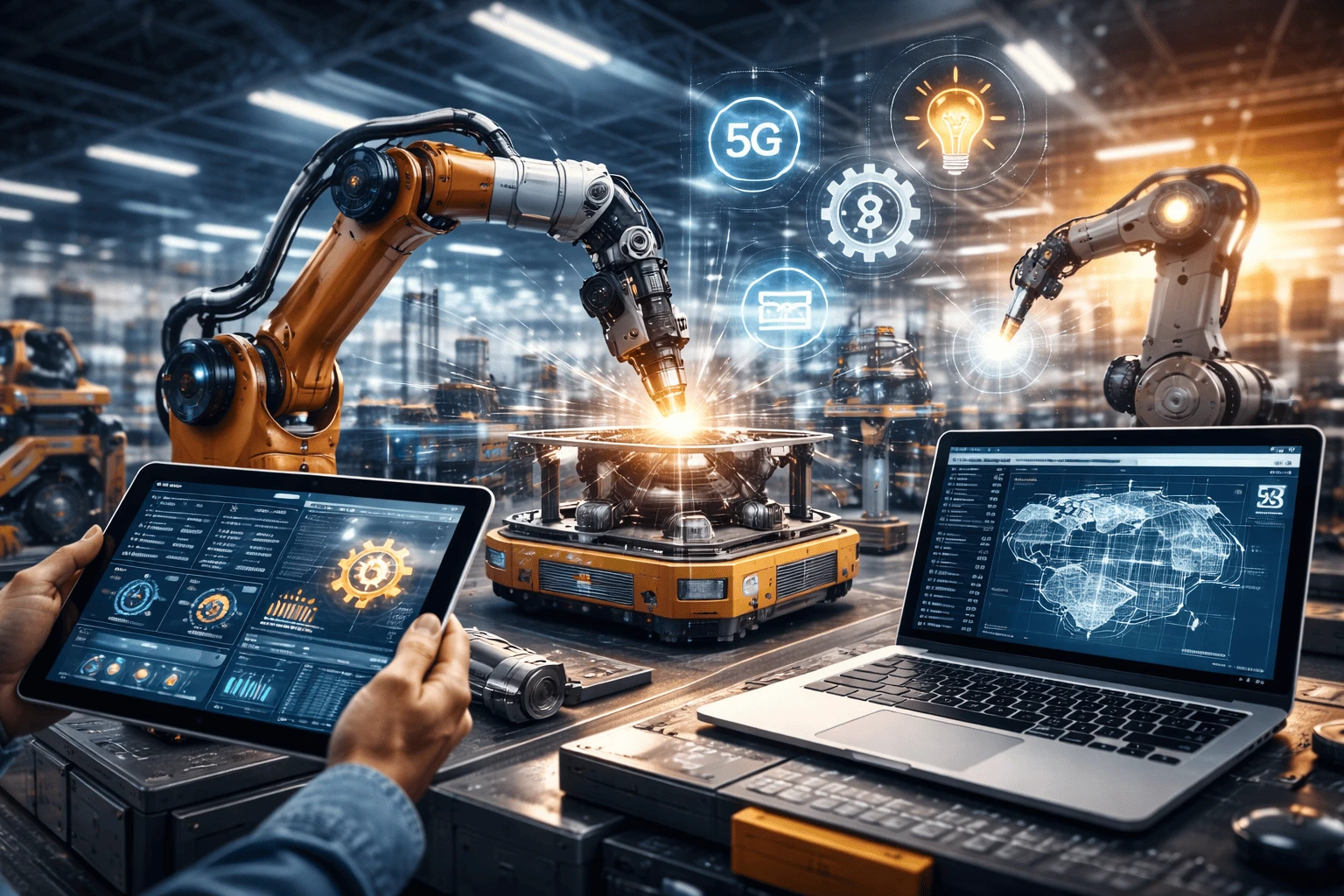
Industrial machinery and equipment are changing faster than ever before. What once depended heavily on manual work and basic mechanical systems is now being shaped by smart technology, automation, and data-driven decision-making. Across factories, warehouses, and production plants, businesses are investing in modern machines that can do more work in less time, with better accuracy and lower operating costs. This shift is not just about buying new equipment. It is about creating smarter, safer, and more efficient industrial environments.
A big reason behind this change is the rise of Industry 4.0, a term used to describe the new era of connected manufacturing. In simple words, machines are no longer working alone. They can now collect data, communicate with other systems, predict faults, and even support decision-making with the help of artificial intelligence. From robotics and smart sensors to energy-saving equipment and digital monitoring tools, the latest innovations are helping industries improve output while reducing waste and downtime.
These developments matter for both large manufacturers and growing businesses. Companies in sectors like automotive, food processing, textiles, construction, and electronics are all seeing the value of modern industrial equipment. In markets like the UK and Pakistan, businesses are also looking for ways to stay competitive by adopting machinery that improves quality and speeds up production.
In this blog, we will explore the latest innovations in industrial machinery and equipment, how they are transforming operations, and why they are becoming essential for the future of manufacturing.
One of the biggest changes in industrial machinery today is that machines are no longer just mechanical tools. They are becoming intelligent systems that can collect data, learn from patterns, and support better decisions on the factory floor. This is the heart of smart manufacturing. Instead of waiting for a machine to fail, businesses can now monitor equipment in real time, improve production flow, and reduce waste with connected systems and software. Siemens describes a smart factory as a highly digitized production facility where IoT-connected machinery and automation improve efficiency, flexibility, and decision-making in real time.
Artificial intelligence is helping industrial machinery move from reactive work to proactive performance. In the past, maintenance teams often fixed equipment only after something broke or followed routine maintenance schedules that did not always match the machine’s real condition. Today, AI and machine learning help factories study equipment data, detect patterns, and predict possible failures before they happen. IBM explains that predictive maintenance uses historical, sensor, and failure data to forecast equipment health, which helps companies avoid unnecessary maintenance and reduce downtime. Siemens also highlights that its predictive maintenance tools use AI to forecast machine failure and prioritize risks so teams know where to act first.
This matters because downtime is expensive. When one important machine stops, the whole production line can slow down. AI-based systems help manufacturers respond earlier, order parts at the right time, and keep operations running more smoothly. For example, a packaging plant in the UK or a textile unit in Pakistan can benefit from sensors and AI dashboards that warn operators about vibration, overheating, or unusual wear before a serious breakdown happens. That means fewer delays, better planning, and lower repair costs. These tools also help smaller manufacturers make smarter decisions without needing a huge engineering team.
The Internet of Things, or IoT, is another major innovation changing industrial equipment. In simple terms, IoT allows machines, sensors, and systems to connect and share information. A smart machine can send performance data to a central dashboard, helping managers see production status, machine health, energy use, and output levels in real time. Siemens says its IIoT solutions help organizations turn IoT data into business value and build industry-specific applications around connected operations.
This connectivity makes factories more responsive. Instead of relying on manual checks, teams can monitor equipment continuously and act faster when something changes. A food processing facility can track temperature and machine performance at the same time. A metal fabrication business can monitor output quality and machine load from one interface. Connected machinery also improves coordination between departments because production, maintenance, and quality teams can all work from the same live information. This is one reason smart factory equipment is becoming more valuable for manufacturers that want consistent quality and better control over daily operations.
Robotics is also becoming more advanced, flexible, and practical. Traditional industrial robots were often kept in separate work areas because they handled fast, repetitive tasks in fixed spaces. Newer collaborative robots, often called cobots, are designed to work more closely with people. ABB says collaborative robots can improve efficiency, safety, and productivity, and its cobot materials emphasize that they are easier to program and useful across many industrial applications.
This is especially useful for manufacturers that need flexibility. Cobots can assist with pick-and-place work, inspection, packaging, and light assembly while human workers handle judgment-based or delicate tasks. That creates a better balance between automation and human skill. In a modern factory, robots are not only speeding up production but also reducing physical strain on workers and improving consistency. ABB also notes that its robotics portfolio now extends beyond fixed robots to include collaborative robots and autonomous mobile robots, showing how industrial automation is becoming more adaptable to different factory needs.
Overall, smart technologies are turning industrial machinery into connected, data-driven systems that are easier to monitor, maintain, and improve. Businesses that invest in AI, IoT, and robotics are not only upgrading machines. They are building stronger, faster, and more competitive operations for the future.
As industries continue to modernize, industrial equipment is moving beyond simple automation and entering a stage where efficiency, sustainability, and precision are becoming top priorities. Businesses are no longer looking only for machines that produce faster. They also want equipment that saves energy, reduces waste, adapts quickly to changing demand, and delivers consistent results. This is why the next wave of industrial machinery innovation is focused not just on performance, but on long-term value.
One of the most important trends in industrial machinery today is the push toward energy efficiency. Rising energy costs and growing environmental concerns are forcing manufacturers to rethink how machines operate. Modern industrial equipment is now being designed to consume less power, reduce emissions, and minimize material waste during production.
For example, newer compressors, motors, and production systems are built with smart energy controls that adjust power usage based on actual workload. Instead of running at full capacity all the time, these machines optimize performance according to demand. This helps businesses lower electricity bills and improve operational efficiency at the same time. In industries such as food production, packaging, textiles, and metalworking, this can lead to major cost savings over time.
Sustainable machinery also supports better resource management. Some modern systems are designed to reduce scrap, improve material handling, and recycle heat or waste energy during production. This is becoming especially valuable in the UK, where manufacturers are under pressure to meet environmental targets, and in Pakistan, where energy efficiency can make a big difference for factories dealing with power costs and supply issues. In many cases, investing in greener machinery is no longer just a branding move. It is a smart business decision.
Another exciting innovation is digital twin technology. A digital twin is a virtual model of a real machine, production line, or entire factory system. It allows manufacturers to simulate how equipment will perform before making physical changes. This gives businesses a safer and more cost-effective way to test ideas, improve layouts, and solve problems without stopping production.
For example, a factory can create a digital version of a machine and monitor how it behaves under different loads, temperatures, or production conditions. This helps engineers spot inefficiencies early and make adjustments before real issues develop. It also supports better planning when companies want to install new machinery or expand operations.
Digital twins are especially useful in industries where precision matters, such as automotive, aerospace, pharmaceuticals, and electronics manufacturing. Instead of relying only on trial and error, businesses can use simulation tools to improve machine settings, increase output quality, and shorten development time. This saves money and reduces risk. As the technology becomes more accessible, even mid-sized manufacturers are starting to see its value.
CNC machines have been part of manufacturing for years, but today’s CNC technology is far more advanced than older systems. Modern CNC equipment offers greater precision, faster processing, easier programming, and stronger integration with digital manufacturing tools. These improvements are making CNC machinery more efficient and more adaptable to industries that demand high accuracy.
Advanced CNC systems can now connect with software platforms that monitor tool wear, track output quality, and adjust settings automatically. This means manufacturers can produce complex parts with less manual intervention and fewer errors. In sectors like engineering, construction materials, furniture production, and industrial component manufacturing, these upgrades help improve both speed and consistency.
Automated production systems are also becoming more common. Instead of relying on separate machines that work independently, manufacturers are increasingly using connected production lines where equipment communicates and works together. A product can move from cutting to shaping to inspection with minimal delay and little human handling. This improves workflow, reduces bottlenecks, and increases overall productivity.
Overall, the future of industrial equipment is being shaped by machinery that is smarter, cleaner, and more adaptable. Energy-efficient systems, digital twin technology, and advanced CNC automation are helping manufacturers prepare for a future where productivity and innovation must go hand in hand.
Industrial machinery and equipment are going through one of the biggest transformations in modern manufacturing history. What once relied heavily on manual operation and basic automation is now being driven by intelligent technologies, connected systems, and advanced engineering solutions. From artificial intelligence and IoT-enabled equipment to robotics, digital twins, and energy-efficient machinery, these innovations are changing how factories operate and how products are manufactured.
One of the most important advantages of these technologies is improved efficiency. Smart machines can monitor their own performance, detect potential issues, and optimize production processes automatically. This helps businesses reduce downtime, minimize waste, and maintain consistent product quality. For manufacturers, even small improvements in efficiency can translate into significant cost savings and higher productivity over time.
Another key benefit is flexibility. Modern industrial equipment allows companies to adapt quickly to market demands. With automated production systems and advanced CNC machines, manufacturers can switch between products, adjust production volumes, and meet customer requirements more easily than before. This flexibility is becoming increasingly important in a global market where speed, customization, and reliability are essential.
Sustainability is also playing a growing role in machinery innovation. Energy-efficient machines, smart resource management systems, and greener production technologies are helping industries reduce their environmental impact while also lowering operational costs. Many companies in the UK and across emerging markets are now investing in sustainable equipment not only to meet regulations but also to build more responsible and future-ready businesses.
In short, the latest innovations in industrial machinery and equipment are not just upgrades—they are shaping the future of manufacturing. Companies that invest in modern, intelligent systems today will be the ones leading the industrial landscape tomorrow.

Hi, I’m Ahmed, a professional content writer and SEO specialist. I help businesses, brands, and websites create clear, engaging, and search-friendly content that attracts the right audience and drives results.
With a strong understanding of SEO, keyword research, blog writing, website content, and content strategy, I craft content that is not only well-written but also optimized to perform on search engines. My goal is to turn ideas into powerful words that build trust, improve visibility, and support business growth.
Whether you need blog posts, website copy, product descriptions, SEO articles, or content optimization, I can help create content that connects with readers and supports your online goals.
Walk into almost any building — a new-build home, a renovated flat, a commercial unit —
1 September 2026
Industrial diesel engines are essential to the functioning of many businesses, from sites of constru
20 August 2026
Poultry processing is serious business in South America. Although Brazil is the world's largest chic
7 August 2026
Be the first to share your thoughts
No comments yet. Be the first to comment!
Share your thoughts and join the discussion below.






.webp&w=3840&q=75)