* All product/brand names, logos, and trademarks are property of their respective owners.
Quality control has always been one of the most important parts of manufacturing. But as production lines become faster, supply chains tighter, and customer expectations higher, traditional inspection methods are no longer enough on their own. This is where the Internet of Things, often called IoT, is making a major difference.
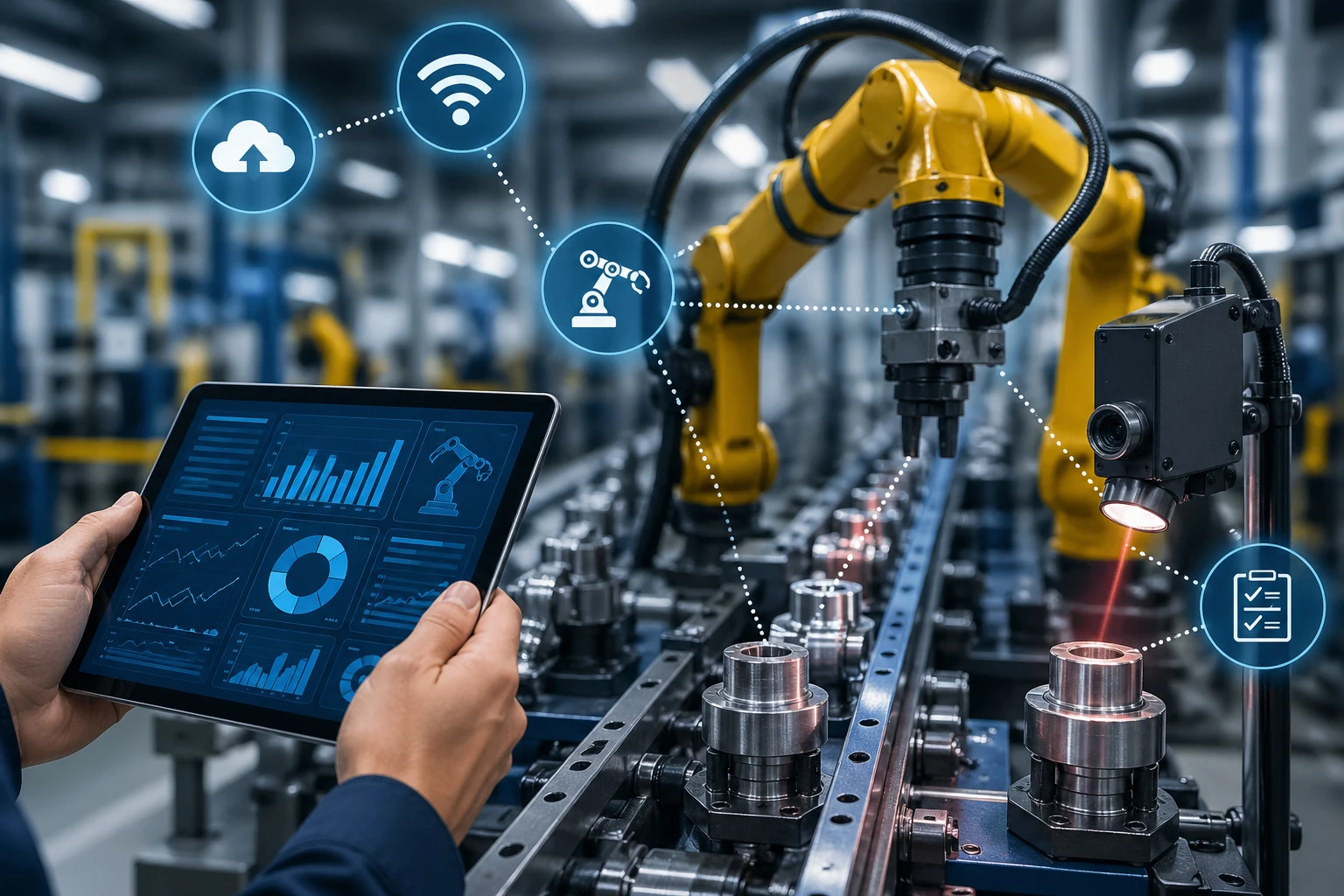
In modern manufacturing plants, IoT connects machines, sensors, inspection tools, and production systems so they can collect and share real-time data. Instead of waiting until the end of a production run to spot defects, manufacturers can monitor quality continuously throughout the process. This helps teams detect problems earlier, reduce waste, avoid costly rework, and keep production running more smoothly.
For UK manufacturers, IoT also supports better traceability, compliance, and operational efficiency. Whether it is tracking temperature, vibration, pressure, machine performance, or product measurements, connected technology gives plant managers a clearer view of what is happening on the shop floor.
IoT is reshaping quality control by giving manufacturers access to live production data instead of relying only on manual checks or end-of-line inspections. In a traditional plant, quality issues may only be discovered after hundreds or even thousands of units have already been produced. With IoT-enabled systems, sensors and connected devices can monitor production conditions continuously, helping teams identify problems as they happen.
Connected machines can track key factors such as temperature, pressure, vibration, humidity, speed, and material flow. This data helps quality teams understand whether equipment is operating within the correct limits. When something moves outside the expected range, alerts can be triggered immediately.
For example, if a machine starts vibrating unusually, it may indicate tool wear, misalignment, or an upcoming failure. IoT data allows teams to investigate before the issue affects product quality. This creates a more proactive approach to quality assurance.
IoT also supports faster defect detection by connecting inspection tools, cameras, sensors, and production software. Instead of checking products manually at the end of the line, manufacturers can inspect quality at multiple stages.
This helps reduce scrap, improve consistency, and prevent defective products from reaching customers. For plant managers, it also means fewer production delays and better control over costs.
For More Information:
Lean Manufacturing Principles That Reduce Waste and Boost Efficiency
IoT improves manufacturing quality by helping teams move from reactive checks to proactive control. Instead of finding faults after production, manufacturers can use connected sensors, machine data, and automated alerts to prevent many quality issues before they become expensive problems.
Predictive quality control uses IoT data to spot patterns that may lead to defects. For example, if temperature, pressure, or machine speed starts drifting away from normal levels, the system can warn operators before product quality is affected.
This is especially useful in high-volume manufacturing plants where even a small process error can lead to large amounts of waste. By acting earlier, teams can protect output, reduce rework, and maintain more consistent standards.
IoT works well with automated inspection systems, including cameras, sensors, barcode scanners, and measurement tools. These systems can check products at different stages of production and send quality data directly to plant software.
This gives quality teams a clearer picture of what is happening across the line. It also reduces reliance on manual inspection alone, which can be slower and more prone to human error.
Poor quality can quickly increase costs through scrap materials, repeated labour, delayed orders, and machine stoppages. IoT helps reduce these issues by identifying faults early and supporting faster decision-making.
For UK manufacturers, maintaining high-quality standards is not just about customer satisfaction—it is also about meeting strict regulatory requirements, staying competitive, and protecting profit margins. IoT plays a key role in this by forming a core part of Industry 4.0 and the broader smart manufacturing transformation.
Many UK industries, including automotive, aerospace, and food manufacturing, require detailed quality records and traceability. IoT systems automatically collect and store production data, making it easier to track every stage of the manufacturing process.
This means manufacturers can quickly identify where a defect occurred, which batch was affected, and what conditions led to the issue. In the event of audits or recalls, having this level of visibility can save both time and cost while ensuring compliance with UK regulations.
IoT provides plant managers with real-time dashboards and insights, helping them make faster and more informed decisions. Instead of relying on outdated reports, managers can see live production data and respond immediately to quality issues.
This leads to better resource allocation, improved production planning, and stronger overall performance. It also allows teams to continuously improve processes based on accurate data rather than assumptions.
The UK manufacturing sector is steadily moving towards Industry 4.0, where digital technologies drive smarter, more connected operations. IoT is a core part of this transformation, enabling automation, data-driven quality control, and improved collaboration between systems.
By adopting IoT, manufacturers can stay competitive in a rapidly evolving market while delivering higher-quality products more consistently.
Implementing IoT in manufacturing is not just about adding sensors or connecting machines. To truly improve quality control, manufacturers need a clear strategy that aligns with their production goals, quality standards, and operational challenges.
When selecting an IoT solution for quality control, it is important to focus on systems that offer real-time monitoring, reliable data collection, and easy integration with existing equipment. Not all manufacturing plants are built the same, so flexibility is key.
Manufacturers should consider solutions that:
It is also important to ensure that data is easy to access and understand. Dashboards, alerts, and reporting tools should support both operators and management teams in maintaining high-quality standards.
While IoT offers clear benefits, there can be challenges during implementation. One of the most common issues is integrating new technology with older legacy systems. Many UK manufacturing plants still rely on traditional machinery, which may require upgrades or additional interfaces to become IoT-compatible.
Another challenge is data management. With large amounts of data being generated, manufacturers need proper systems in place to store, analyse, and act on this information effectively. Cybersecurity is also a key consideration. As more devices become connected, protecting production data and systems becomes increasingly important. Despite these challenges, the long-term benefits of improved quality, reduced waste, and better efficiency often outweigh the initial investment.
The manufacturers investing in IoT-enabled quality control are building a structural advantage: higher first-pass yields reduce production costs, lower defect escape rates reduce warranty expenses, and the continuous data generated by IoT monitoring provides the foundation for ongoing process improvement that compounds over time. Those still relying on end-of-line inspection and periodic sampling face higher defect rates, higher rework costs, and increasing difficulty demonstrating the process control that sophisticated customers audit before awarding contracts.
In 2026, IoT-enabled quality control has moved from a competitive advantage to a competitive necessity in the manufacturing segments where it is most widely deployed. The window for being an early mover is closing. The cost of being a late one is growing.
Explore more insights on smart manufacturing, IoT, and modern industrial innovations in our Manufacturing & Engineering category and stay updated with the latest industry trends.

I’m an SEO specialist passionate about helping websites grow and stand out in search results. From keyword research to content strategy and on-page optimization, I use data-backed techniques to increase organic traffic and build long-term visibility.
For most engineering teams and facility owners, selecting a wastewater treatment plant manufacturer
7 August 2026
Cutting acrylic sheets can look simple, but one rushed cut can quickly lead to cracks, chips, or une
25 May 2026
Sustainable manufacturing is no longer just a future goal—it has become a business necessity.
30 April 2026
Be the first to share your thoughts
No comments yet. Be the first to comment!
Share your thoughts and join the discussion below.
.webp&w=3840&q=75)






.webp&w=3840&q=75)