* All product/brand names, logos, and trademarks are property of their respective owners.
Sustainable manufacturing is no longer just a future goal—it has become a business necessity. As climate concerns continue to rise and environmental regulations become more strict, industries around the world are under increasing pressure to reduce their carbon footprint without compromising efficiency, productivity, or profitability. This shift, however, is not only about compliance or meeting regulatory standards. It represents a much deeper transformation in how modern manufacturing operates. Companies are now focusing on building smarter, more efficient systems that reduce waste, optimize resource usage, and support long-term operational savings while also addressing environmental responsibilities.
At the same time, consumer expectations are evolving. Today’s customers are more environmentally conscious and prefer brands that actively demonstrate sustainable practices. This means that businesses adopting greener manufacturing methods are not only contributing to environmental protection but also strengthening their brand value and competitive position in the market.
Sustainable manufacturing refers to producing goods through processes that minimize environmental impact while maximizing efficiency and social responsibility. It focuses on reducing energy consumption, limiting waste, and lowering emissions at every stage of production.
This approach goes beyond simply “being eco-friendly.” It involves rethinking the entire product lifecycle—from sourcing raw materials to production, packaging, and delivery. Many companies are now designing products that last longer, use fewer resources, and can be recycled or reused.
In simple terms, sustainable manufacturing is about doing more with less—less energy, less waste, and fewer emissions.
A carbon footprint measures the total greenhouse gas emissions produced by industrial activities. The manufacturing sector is one of the largest contributors to global emissions, which makes it a critical area for improvement.
Reducing carbon emissions offers multiple benefits:
Today, sustainability is not just an environmental responsibility—it’s a competitive advantage.
One of the fastest ways to reduce emissions is by improving energy efficiency. Manufacturing facilities rely heavily on energy for machinery, heating, cooling, and production processes.
Modern factories are now using:
For example, upgrading old machinery or improving insulation can significantly reduce energy consumption without major operational changes.
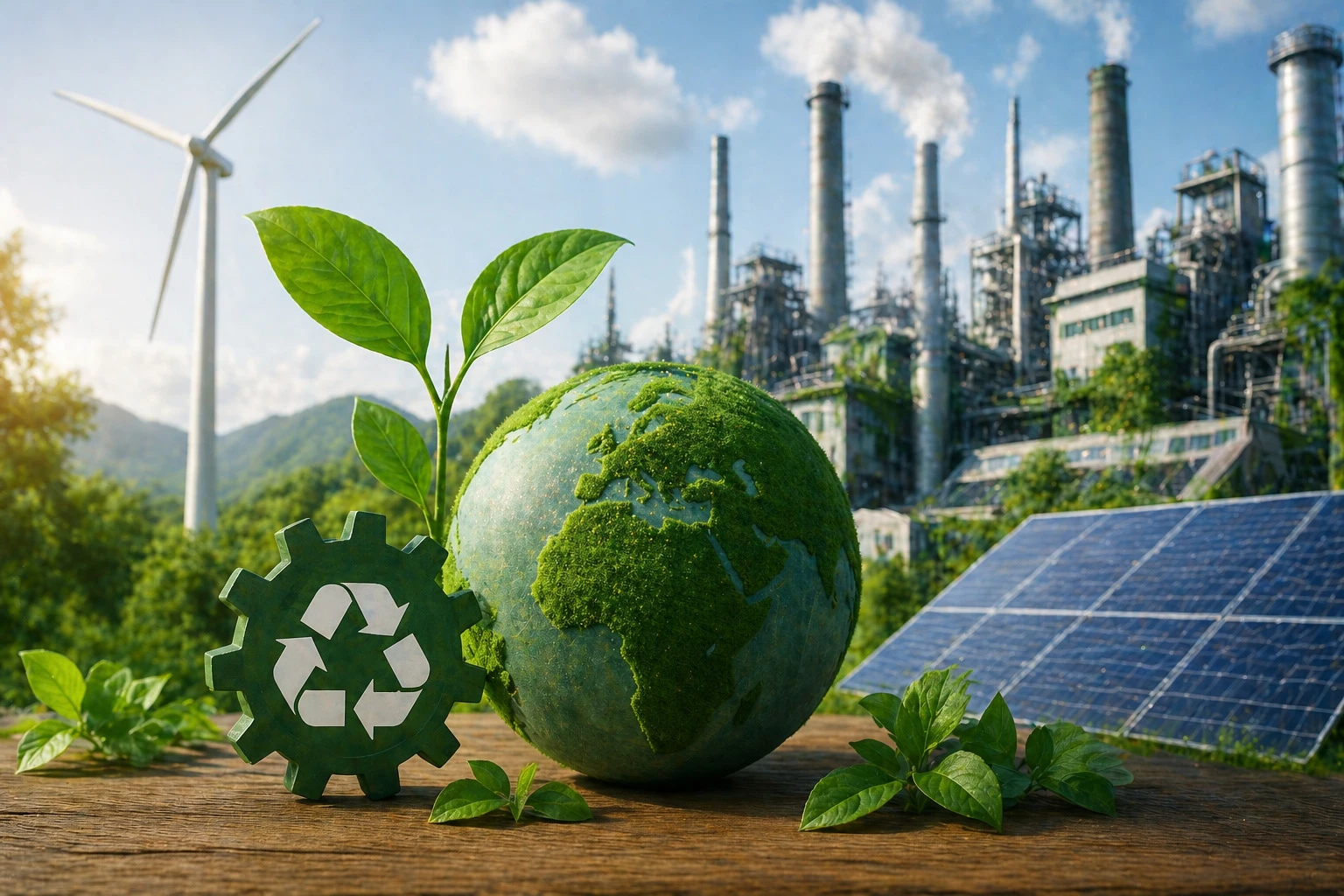
Many industries are shifting from fossil fuels to renewable energy sources such as solar and wind power. This transition not only reduces carbon emissions but also protects businesses from rising energy costs.
A growing number of factories now install:
These changes allow companies to operate more sustainably while maintaining consistent energy supply.
Material selection plays a major role in sustainability. Industries are moving toward:
By reducing dependence on virgin resources, companies can lower production costs and environmental impact at the same time.
Traditional manufacturing often generates large amounts of waste. To address this, companies are adopting lean manufacturing techniques that focus on efficiency and waste reduction.
Key strategies include:
This shift supports the circular economy, where materials are reused instead of discarded.
Technology is playing a major role in sustainable manufacturing. Smart factories use advanced systems like artificial intelligence and machine learning to improve efficiency and reduce waste.
These systems help:
The result is less downtime, lower energy consumption, and reduced emissions.
Industries are also adopting cleaner production methods that reduce environmental impact at the source. This includes:
Cleaner production not only protects the environment but also improves workplace safety and product quality.
Sustainability doesn’t stop at the factory. Companies are now focusing on their entire supply chain by working with environmentally responsible suppliers.
This includes:
Greater transparency helps businesses maintain consistent sustainability standards.
Transportation is a major contributor to carbon emissions. To reduce this, industries are:
Better logistics planning not only lowers emissions but also reduces operational costs.
Government policies and consumer expectations are powerful forces driving sustainable manufacturing.
Many countries now enforce strict environmental regulations that require industries to:
At the same time, consumers are becoming more aware of environmental issues. They prefer brands that demonstrate sustainability and transparency. This shift in demand is encouraging companies to invest in greener practices and communicate their efforts more clearly.
Despite its benefits, transitioning to sustainable manufacturing comes with challenges.
Some common obstacles include:
However, these challenges are becoming easier to manage as technology advances and sustainable solutions become more affordable.
The future of manufacturing is undeniably green. Industries are moving toward:
Collaboration between governments, businesses, and consumers will play a key role in accelerating this transition. Companies that invest in sustainability today will be better prepared for future challenges and opportunities.
Sustainable manufacturing is transforming the way industries operate. By focusing on energy efficiency, renewable resources, waste reduction, and innovative technologies, companies are making real progress in reducing their carbon footprint. While the journey comes with challenges, the long-term benefits are clear—lower costs, stronger brand value, and a healthier planet.
In today’s world, sustainability is not optional. It is the foundation of smarter, more responsible, and future-ready manufacturing.
Explore more insights and in-depth guides on sustainable and modern manufacturing practices in our Manufacturing & Engineering category, and stay updated with the latest industry trends.

I’m an SEO specialist passionate about helping websites grow and stand out in search results. From keyword research to content strategy and on-page optimization, I use data-backed techniques to increase organic traffic and build long-term visibility.
For most engineering teams and facility owners, selecting a wastewater treatment plant manufacturer
7 August 2026
Cutting acrylic sheets can look simple, but one rushed cut can quickly lead to cracks, chips, or une
25 May 2026
Quality control has always been one of the most important parts of manufacturing. But as production
27 April 2026
Be the first to share your thoughts
No comments yet. Be the first to comment!
Share your thoughts and join the discussion below.
.webp&w=3840&q=75)






.webp&w=3840&q=75)