* All product/brand names, logos, and trademarks are property of their respective owners.
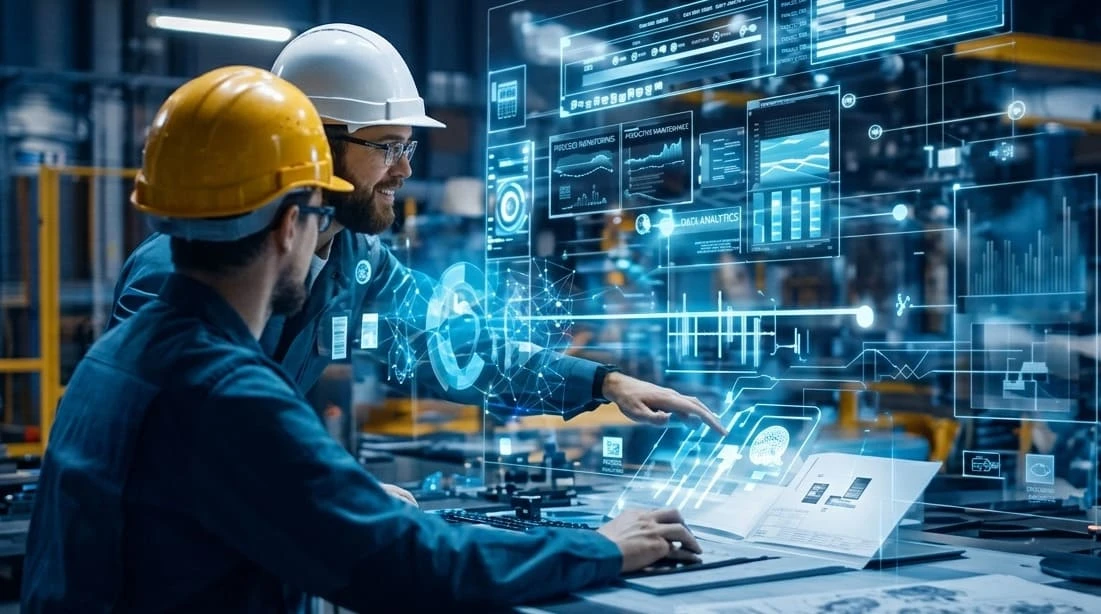
Industrial workplaces have always carried higher safety risks than ordinary office environments. Heavy machines, moving vehicles, chemicals, electrical systems, heights, and repetitive tasks can all create hazards when safety controls are weak. That is why technology improving workplace safety has become such an important shift for manufacturers, warehouses, construction firms, and other industrial businesses.
Modern safety technology does more than react after an accident. It helps teams spot risks earlier, monitor conditions in real time, and protect workers before small problems turn serious.
Industrial environments often involve fast-moving operations, so even a small mistake can lead to a serious incident. Smart safety systems help reduce risks by giving teams better visibility into hazards before they cause harm.
Common risks include:
Technology helps by tracking conditions, sending alerts, and supporting faster decisions. For example, a smart sensor can detect rising machine vibration before equipment fails. A wearable device can alert supervisors when a worker shows signs of fatigue. These tools do not replace safety training, but they make safety programs stronger and more proactive.
If you want to understand more about how safety rules work in industrial settings, you can also check out Workplace Safety Standards Every Manufacturing Company Must Follow.
Modern industrial facilities now use connected technologies to reduce accidents, improve response times, and create safer daily operations. These tools help companies move from reactive safety management to prevention-focused safety systems.
AI-powered systems can analyze workplace activity in real time. Cameras and software detect unsafe movement, missing protective equipment, or dangerous behavior before incidents happen.
AI tools can help businesses:
Some factories already use AI systems to detect whether workers are wearing helmets or entering hazardous zones without authorization.
Industrial IoT systems use connected sensors to monitor equipment and workplace conditions continuously. These sensors provide instant alerts when readings become dangerous.
Common uses include:
For example, a sensor in a manufacturing plant can immediately notify supervisors if equipment overheats or if air quality becomes unsafe.
Wearable technology is becoming more common in industrial settings because it improves worker monitoring without interrupting productivity.
Popular wearable safety devices include:
These tools are especially valuable in mining, construction, and oil operations where employees may work in isolated or hazardous locations.
Automation reduces direct human exposure to dangerous tasks. Robots can safely handle repetitive lifting, toxic materials, extreme temperatures, and high-risk production activities.
Benefits include:
Collaborative robots, often called cobots, also work alongside employees to improve safety during repetitive industrial tasks.
Equipment failures are a major cause of industrial accidents. Predictive maintenance technology helps companies detect mechanical issues before machines break down.
These systems analyze:
Instead of waiting for machinery to fail, maintenance teams can repair problems early and reduce safety risks.
For related reading, add an internal link to predictive maintenance in manufacturing.
| Technology | Main Safety Benefit | Common Industrial Use |
|---|---|---|
| AI Monitoring | Real-time hazard detection | Manufacturing plants |
| IoT Sensors | Environmental monitoring | Warehouses and factories |
| Wearables | Worker health tracking | Construction and mining |
| Robotics | Reduced hazard exposure | Assembly lines |
| Predictive Maintenance | Accident prevention |
Heavy equipment operations |
Industrial companies are investing in safety technology because the benefits go beyond accident prevention. Smarter systems also improve productivity, compliance, and operational stability.
Key advantages include:
Real-time monitoring also helps managers make quicker decisions during emergencies. If a gas leak, overheating machine, or equipment failure occurs, automated alerts allow teams to respond immediately instead of relying only on manual inspections.
Another major benefit is better reporting accuracy. Digital safety systems automatically collect operational data, making audits and compliance tracking much easier for industrial businesses. Companies that adopt advanced safety tools often notice long-term improvements in employee morale as well. Workers feel more secure when employers actively invest in safer equipment and monitoring systems.
Several industries are already seeing major results from safety-focused technology adoption. These tools help reduce injuries while improving operational efficiency.
Factories use AI cameras, robotics, and predictive maintenance systems to reduce machine-related accidents and equipment failures.
Construction firms rely on wearable devices, smart helmets, and location tracking systems to improve worker visibility and reduce site hazards.
Warehouses use automated lifting systems, smart sensors, and vehicle monitoring technology to lower forklift accidents and repetitive strain injuries.
Oil and gas facilities use environmental sensors and remote monitoring systems to detect leaks, pressure changes, and hazardous conditions faster.
Mining companies use wearable tracking systems and air-quality sensors to improve worker protection in high-risk underground environments. Industrial businesses adopting these technologies are creating safer worksites while also improving productivity and compliance standards.
Although safety technology offers major advantages, implementation can still create challenges for industrial businesses. Companies need proper planning to get the best results from these systems.
One of the biggest barriers is the initial investment cost. Advanced sensors, AI systems, wearable devices, and automation tools can require significant spending, especially for smaller facilities. However, many companies view these systems as long-term investments because they reduce accident costs and operational downtime over time.
Employee training is another important factor. Workers must understand how to use new tools correctly for the technology to improve safety effectively. Businesses that provide practical training usually achieve smoother adoption and better results.
Older industrial facilities may also face integration problems. Some legacy machines were not designed to connect with modern digital systems, which can increase setup complexity.
Data privacy and monitoring concerns may also appear in workplaces using AI cameras or wearable tracking devices. Clear communication about how safety data is collected and used can help companies maintain employee trust.
To better understand how safety challenges and risks affect day-to-day operations, you can also explore our related guide on Workplace Injuries That Happen Every Day — And How to Stop Them.
Industrial safety technology is continuing to evolve as businesses move toward smarter and more connected operations. Future systems will focus even more on prediction, automation, and real-time decision-making.
One major trend is the growth of smarter personal protective equipment (PPE). Modern helmets, glasses, and safety vests are already being designed with sensors that can track worker movement, fatigue, temperature, and environmental conditions.
AI-powered predictive safety systems are also becoming more advanced. Instead of only identifying current hazards, these systems can analyze large amounts of operational data to predict future risks before incidents happen.
Digital twins are another growing innovation. These virtual models of industrial facilities allow companies to simulate operations, identify weak points, and test safety improvements without disrupting production.
Connected industrial ecosystems will also continue expanding. Machines, sensors, vehicles, and workers will communicate through centralized systems that improve visibility across entire facilities.
Human-robot collaboration is expected to improve as well. Future collaborative robots will work more safely alongside employees, helping reduce repetitive strain injuries and exposure to dangerous environments.
Technology improving workplace safety is changing industrial operations in powerful ways. From AI monitoring systems and IoT sensors to wearable devices and predictive maintenance tools, modern technologies are helping businesses reduce accidents, improve response times, and create safer environments for workers.
Industrial companies that invest in smarter safety systems are not only protecting employees but also improving efficiency, compliance, and long-term operational performance. As industrial technology continues advancing, safety management will become more proactive, connected, and data-driven.
Explore more safety solutions and industrial products at industlinks.com to help create safer and more efficient workplaces for your business.

I’m an SEO specialist passionate about helping websites grow and stand out in search results. From keyword research to content strategy and on-page optimization, I use data-backed techniques to increase organic traffic and build long-term visibility.
Dental tourism has transformed how people approach their oral health care. Many patients now choose
15 July 2026
Recovery after knee replacement surgery requires time, rest, and the right environment. Surgical car
4 June 2026
There's little doubt that dental problems don't often happen out of the blue. Instead, they tend to
30 May 2026
Be the first to share your thoughts
No comments yet. Be the first to comment!
Share your thoughts and join the discussion below.






.webp&w=3840&q=75)