* All product/brand names, logos, and trademarks are property of their respective owners.
In manufacturing, workplace safety is not just a legal requirement it is essential for protecting people, reducing downtime and keeping operations running smoothly. From machinery and manual handling to hazardous substances, PPE and emergency planning, every manufacturing company in the UK needs clear safety standards that are understood and followed across the site.
Good safety practice starts with identifying risks before they cause harm. The Health and Safety Executive highlights risk assessment as a key part of managing workplace health and safety, while PPE should be selected carefully and used when other controls do not fully remove the risk.
For manufacturers, this means having the right processes, training and equipment in place not just paperwork. Suitable safety signs, protective clothing, respiratory protection, first aid supplies and hazard control products all help create a safer working environment.
Manufacturing environments carry higher day-to-day risks than many office-based workplaces. Employees may be working around moving machinery, sharp materials, hot surfaces, chemicals, dust, noise, forklifts, heavy loads and fast-moving production targets. Without strong workplace safety standards, these risks can quickly lead to injuries, downtime, damaged equipment and legal consequences.
In the UK, employers are legally required to protect employees and others from harm. HSE guidance explains that employers must identify hazards, assess risks and take action to eliminate or control those risks. The Health and Safety at Work etc. The Act 1974 is also the main piece of legislation covering occupational health and safety in Great Britain.
A safe manufacturing site is not only better for workers, it is better for business. When staff feel protected, trained and equipped, they can focus on doing their jobs properly. Fewer accidents also mean fewer delays, fewer insurance issues and less disruption to production schedules.
Good safety standards can include clear walkways, suitable PPE, visible safety signs, machine guards, spill controls, first aid access and regular checks. These everyday measures help reduce avoidable incidents while showing employees, contractors and visitors that safety is taken seriously.
For manufacturing companies, safety responsibility starts with leadership. Employers should make sure risks are assessed, control measures are in place, workers are trained and equipment is suitable for the task.
This also means reviewing safety procedures regularly. As production lines change, new machinery is installed or different materials are introduced, risk levels can change too. Keeping safety standards updated helps businesses stay compliant and prepared.
Every manufacturing company should have clear safety standards that cover the real risks found on the factory floor. These standards should be easy to understand, regularly reviewed and backed by the right equipment, training and supervision.
Risk assessments are the foundation of workplace safety. Manufacturing businesses should identify hazards such as moving machinery, chemicals, slips, trips, manual handling, noise, dust and vehicle movement. Once risks are identified, the next step is to control them through safer processes, guards, ventilation, signage, PPE and staff training.
A good risk assessment should not sit forgotten in a folder. It should be reviewed when new equipment, materials, layouts or working practices are introduced.
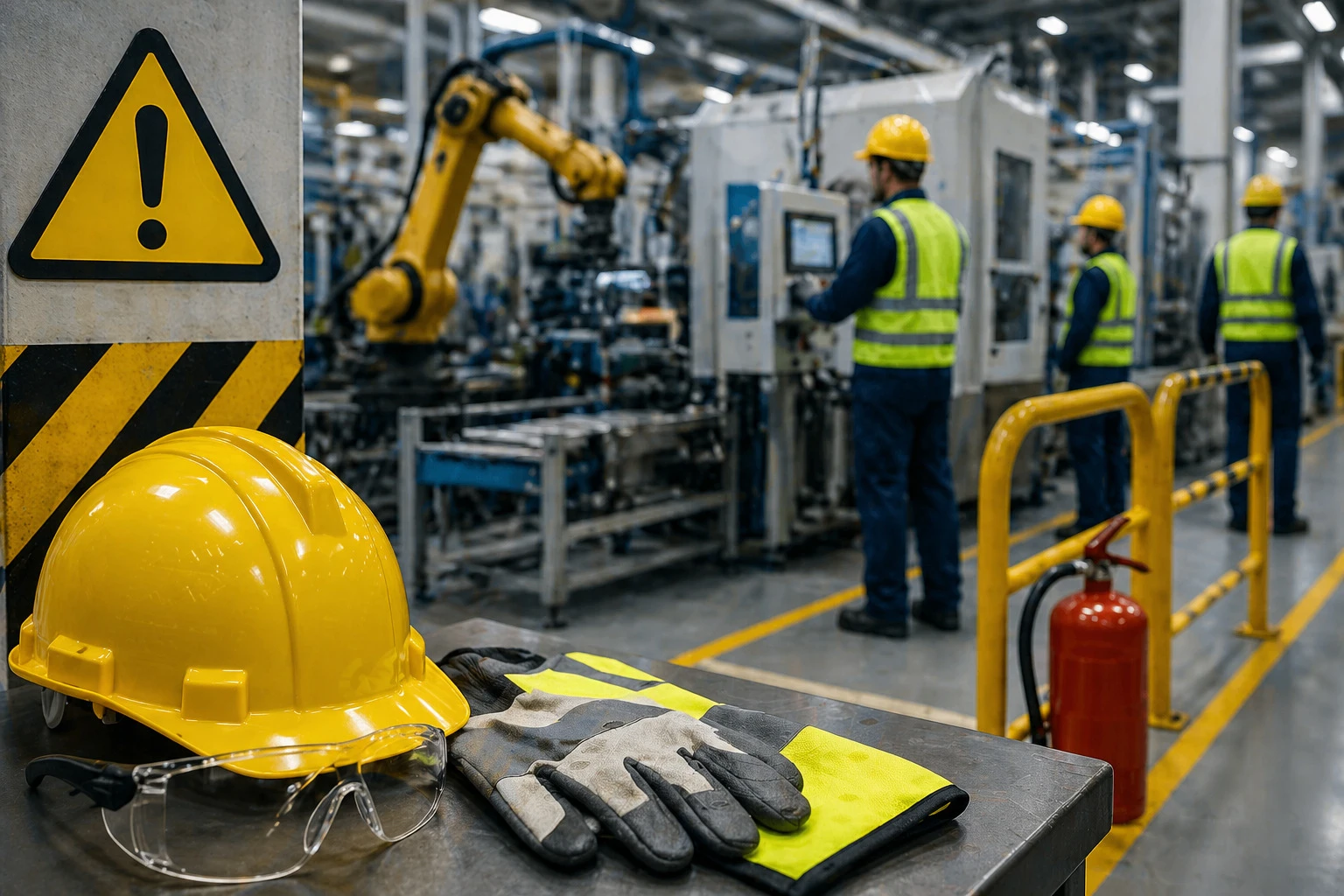
Personal protective equipment is essential when risks cannot be fully removed. Depending on the task, workers may need safety gloves, protective eyewear, hard hats, ear defenders, respiratory protection, safety footwear or high-visibility clothing.
PPE must be suitable, comfortable and correctly maintained. Employers should also make sure workers know when and how to use it properly.
Machinery is one of the biggest safety concerns in manufacturing. Equipment should have suitable guarding, emergency stop controls, safe operating procedures and planned maintenance checks.
Workers should never be expected to operate machinery without training. Clear signs, lockout procedures and regular inspections can help prevent serious injuries.
For More Information:
Workplace injuries that happen every day and how to stop them
Manufacturing companies must follow several important UK health and safety regulations to protect workers and maintain compliance. These rules help businesses manage everyday risks such as machinery use, hazardous substances, lifting tasks, workplace accidents and employee training.
The Health and Safety at Work etc. The 1974 Act is the main foundation of workplace safety in the UK. It requires employers to protect the health, safety and welfare of employees, as well as others who may be affected by business activities.
For manufacturers, this means creating safe systems of work, maintaining equipment, providing training and making sure workers have the right tools and protection for their roles.
Manufacturing sites often involve chemicals, dust, fumes, machinery and physical labour. That is why regulations such as COSHH, PUWER and the Manual Handling Operations Regulations are so important.
COSHH covers the control of hazardous substances. PUWER focuses on safe work equipment. Manual handling rules help reduce injuries from lifting, carrying, pushing or pulling loads.
Manufacturing businesses should also keep clear records of workplace accidents, near misses, inspections and training. Under RIDDOR, certain serious workplace incidents must be reported.
Good record keeping helps companies spot patterns, improve safety procedures and prove that reasonable steps have been taken to manage risks.
The right safety equipment helps turn workplace standards into everyday action. Manufacturing companies should not only understand regulations — they should make sure teams have easy access to the products that support safe working.
Essential items can include safety gloves, eye protection, ear defenders, respirators, high-visibility clothing and protective footwear. Clear safety signs are also important for marking hazards, emergency exits, restricted areas and mandatory PPE zones.
Every manufacturing site should also have suitable first aid supplies that match the level of workplace risk.
Emergency planning should cover fire safety, spill response, evacuation routes, machinery shutdowns and first aid procedures. Regular workplace checks help confirm that equipment is available, signs are visible and workers are following safe systems.
Workplace safety standards are essential for every manufacturing company. From risk assessments and PPE to machinery guarding, COSHH compliance, manual handling controls and emergency planning, each part plays a role in protecting workers and keeping operations efficient.
For UK manufacturers, the goal should be simple: identify risks early, control hazards properly, train employees clearly and provide the right safety equipment for daily tasks. Strong safety standards help reduce accidents, improve confidence on the factory floor and support long-term compliance. Whether you are reviewing PPE, updating safety signs, improving first aid readiness or strengthening workplace protection, IndustLinks can help you explore relevant health and safety essentials.
To explore more expert guidance and practical workplace safety resources, visit our Health & Safety section for in-depth articles and compliance insights.

I’m an SEO specialist passionate about helping websites grow and stand out in search results. From keyword research to content strategy and on-page optimization, I use data-backed techniques to increase organic traffic and build long-term visibility.
Dental tourism has transformed how people approach their oral health care. Many patients now choose
15 July 2026
Recovery after knee replacement surgery requires time, rest, and the right environment. Surgical car
4 June 2026
There's little doubt that dental problems don't often happen out of the blue. Instead, they tend to
30 May 2026
Be the first to share your thoughts
No comments yet. Be the first to comment!
Share your thoughts and join the discussion below.







.webp&w=3840&q=75)