* All product/brand names, logos, and trademarks are property of their respective owners.
The construction industry has always faced the same big challenge: how to deliver projects faster without losing quality. Whether it is a housing scheme, a school building, a hospital extension, or a commercial space, delays can create serious problems. Costs rise, labour schedules shift, materials become harder to manage, and clients grow frustrated. In many cases, traditional construction methods struggle to keep up with the speed that modern projects now demand.
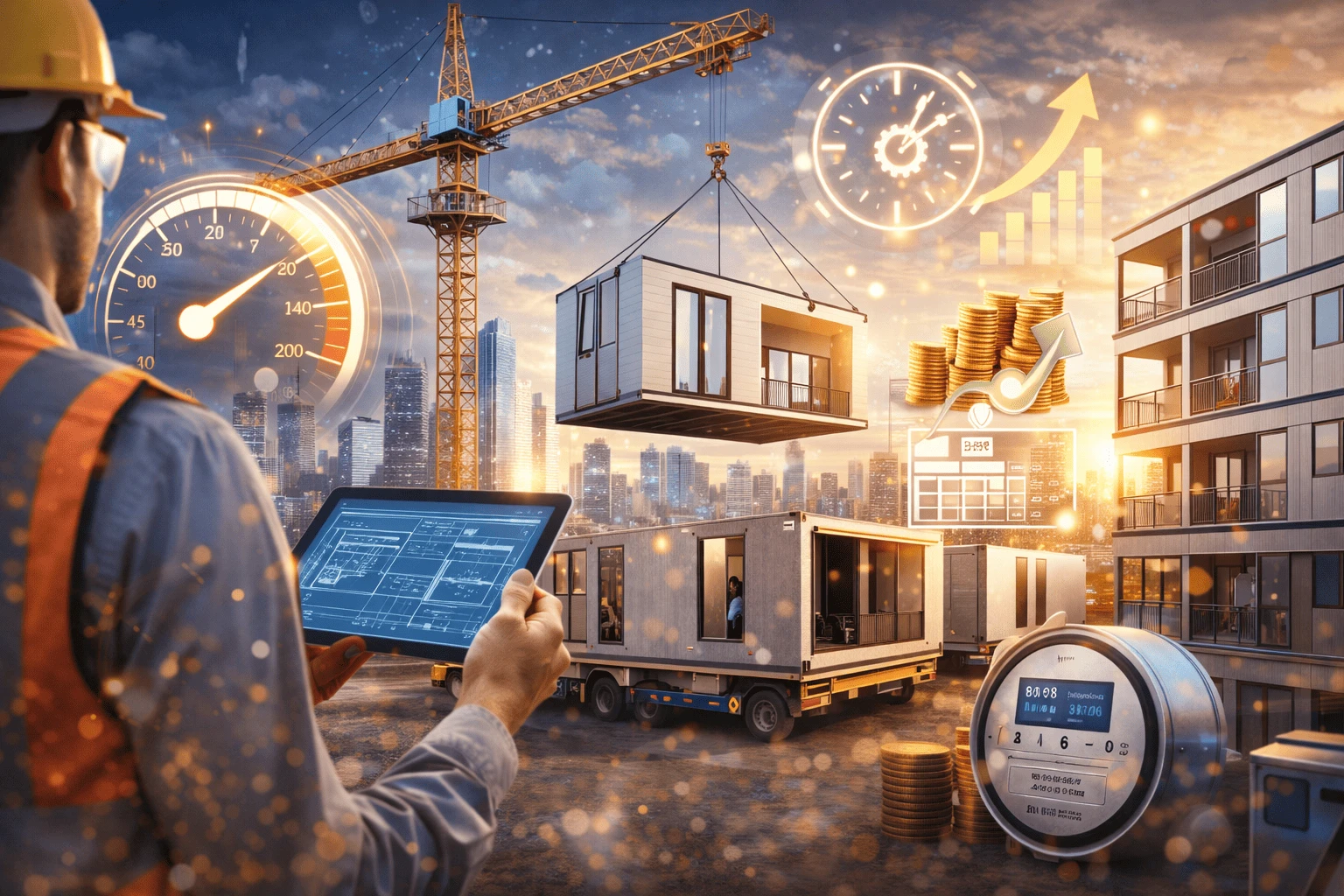
This is where modular construction is changing the conversation. Instead of building everything from the ground up on-site, modular construction uses factory-built sections, or modules, that are manufactured in a controlled environment and then transported to the site for assembly. This process helps teams work smarter and faster because site preparation and building production can happen at the same time. That alone can save a significant amount of time compared to conventional methods.
Another reason modular construction is growing so quickly is that it helps reduce many of the delays that slow projects down. Bad weather, labour shortages, site congestion, and inconsistent workmanship can all affect traditional building timelines. With offsite construction, much of the work is completed in a factory where conditions are more controlled and predictable. This leads to better efficiency, faster installation, and often stronger quality control as well.
As modern cities expand and demand for housing, infrastructure, and commercial development continues to rise, builders are looking for methods that are practical, reliable, and scalable. Modular construction stands out because it offers all three. It is no longer seen as a niche idea. It is becoming a serious solution for developers, contractors, and investors who want to complete projects on time and stay competitive in a fast-moving market.
Modular construction is a building method where large parts of a structure are made in a factory instead of being fully built on-site. These parts, often called modules, are then transported to the construction location and assembled into a finished building. In simple words, it is like building sections of a project indoors first and then putting them together where the final structure will stand.
This approach is very different from traditional construction. In a conventional project, most work happens at the site itself. Foundations, walls, roofing, electrical work, and fittings are often completed one stage at a time, which can take months or even years. With modular construction, many of these tasks are handled in a controlled production setting, which allows work to move faster and with fewer interruptions.
Offsite construction is a broader term, while modular construction is one of its most popular forms. Some systems use complete room-sized modules, while others use prefabricated panels or structural parts. No matter the format, the goal is the same: reduce delays, improve efficiency, and make project delivery more predictable.
The biggest reason modular construction is growing fast is simple: speed matters more than ever. Clients want buildings delivered sooner, and developers want to start using or selling those spaces as quickly as possible. Time savings can create a major business advantage, especially in housing, healthcare, education, and commercial development.
Another major reason is labour pressure. Many markets are facing shortages of skilled construction workers, and project teams are under pressure to do more with fewer people. Modular methods help by shifting a large part of the work to factory teams, where processes can be organized more efficiently.
Cost control also plays a big role. Traditional construction can suffer from delays, waste, rework, and unpredictable scheduling problems. Modular systems help reduce these risks because production happens in a more planned and controlled environment. That makes budgeting and deadline planning easier for contractors and investors.
Modular construction is no longer limited to temporary buildings. It is now being used in a wide range of sectors. Residential developers use it for apartments, housing schemes, and student accommodation because it helps meet growing demand faster. In the UK, modular housing has become a strong option for speeding up delivery in areas facing housing pressure.
Healthcare is another major area. Hospitals and clinics often need quick expansion, especially when demand rises unexpectedly. Modular construction allows extra units, patient wards, and treatment spaces to be added in less time. Schools are also using modular classrooms and education blocks because they can be installed quickly with less disruption to daily operations.
In Pakistan and other developing markets, modular and prefabricated buildings are gaining attention for affordable housing, site offices, commercial units, and fast-track infrastructure needs. Internationally, countries like the UK, Singapore, and parts of Europe are pushing these methods because they support quicker, cleaner, and more organized building delivery.
One of the biggest reasons modular construction is faster than traditional building is that two major parts of the project can happen at the same time. In a normal construction process, teams usually have to wait for one stage to finish before moving fully into the next. Site clearing, foundation work, structure building, internal systems, and finishing often follow a long sequence. That step-by-step approach can slow everything down.
With modular construction, the timeline becomes much smarter. While the site team prepares the land, foundations, and utility connections, the factory team can already begin building the modules. This means the structure is being produced offsite at the same time as groundwork is happening onsite. Instead of waiting for one phase to end before another begins, both move together. That can cut weeks or even months from the overall schedule.
This time-saving advantage is especially useful in fast-moving sectors like housing, education, and healthcare. For example, if a developer needs to deliver student accommodation before a new academic session starts, or if a hospital needs extra patient space quickly, modular construction offers a much more efficient path. The project does not have to depend on the slow rhythm of a fully onsite process.
Traditional construction often depends heavily on weather conditions. Rain, wind, extreme heat, or cold can delay work, affect materials, and reduce labour productivity. On many sites, even a few bad weather days can throw off the entire project schedule. This is one of the most common reasons why construction deadlines slip.
Modular construction solves much of this problem because a large part of the work takes place inside a factory. In that setting, production continues in a controlled environment, protected from weather-related interruptions. Workers can follow fixed schedules, materials can be stored properly, and quality checks can happen without outside disruption. This creates a more stable and reliable workflow.
There is also less chaos on the construction site itself. Since much of the building arrives in completed sections, there are fewer deliveries, fewer trades working over each other, and less congestion overall. That can make project management easier and safer. In busy city areas, schools, hospitals, and commercial districts, this reduced disruption is a major advantage because it allows projects to move ahead with less impact on nearby operations and communities.
Another major reason modular construction speeds up modern projects is the level of consistency it brings. In traditional construction, quality can vary depending on weather, subcontractor coordination, and site conditions. Mistakes or rework can slow progress and increase costs. In modular construction, building components are produced in a more controlled setting, where systems, tools, and processes are standardized. This usually leads to better precision and fewer delays caused by errors.
Once the modules are completed and delivered to the site, installation can happen very quickly. Instead of building everything piece by piece, teams assemble large completed sections into place. This can dramatically reduce onsite construction time. A building that might take many months through traditional methods can be enclosed and made functional much sooner with modular techniques.
This faster installation is a major benefit for projects that need to open quickly and start generating value. A hotel can begin taking bookings sooner, a school can welcome students faster, and a commercial unit can become operational earlier. In simple terms, modular construction does not just save time during the build. It helps projects reach the finish line faster and start serving their purpose sooner.
Modular construction is quickly becoming one of the most practical solutions for speeding up modern building projects. As cities grow and demand for housing, healthcare facilities, schools, and commercial spaces continues to increase, developers and contractors need construction methods that can deliver results faster without sacrificing quality. Modular construction offers exactly that.
By moving a large portion of the building process into a controlled factory environment, project teams can work more efficiently and avoid many of the delays that commonly affect traditional construction. The ability to build modules while site preparation is happening at the same time is one of the biggest advantages. This parallel process can shorten project timelines significantly, allowing buildings to be completed and operational much sooner.
Another key benefit is the reduction of weather-related disruptions. Since most structural work happens indoors, construction schedules become more predictable. Quality control also improves because factory production allows for consistent standards, better supervision, and fewer on-site complications. When the modules arrive at the site, installation happens quickly, transforming what used to be a long construction process into a faster and more organized assembly.
For developers, investors, and project managers, this means lower risk, improved scheduling, and faster returns on investment. For communities, it means important buildings such as homes, schools, and hospitals can be delivered sooner. As technology and construction innovation continue to evolve, modular methods are likely to play an even bigger role in shaping the future of the industry.
In the coming years, we can expect modular construction to move from being an alternative approach to becoming a mainstream building strategy. Companies that embrace these modern construction methods early will be better positioned to meet growing demand, control costs, and deliver projects at the speed the modern world requires.

Hi, I’m Ahmed, a professional content writer and SEO specialist. I help businesses, brands, and websites create clear, engaging, and search-friendly content that attracts the right audience and drives results.
With a strong understanding of SEO, keyword research, blog writing, website content, and content strategy, I craft content that is not only well-written but also optimized to perform on search engines. My goal is to turn ideas into powerful words that build trust, improve visibility, and support business growth.
Whether you need blog posts, website copy, product descriptions, SEO articles, or content optimization, I can help create content that connects with readers and supports your online goals.
Walk into almost any building — a new-build home, a renovated flat, a commercial unit —
1 September 2026
Industrial diesel engines are essential to the functioning of many businesses, from sites of constru
20 August 2026
Poultry processing is serious business in South America. Although Brazil is the world's largest chic
7 August 2026
Be the first to share your thoughts
No comments yet. Be the first to comment!
Share your thoughts and join the discussion below.






.webp&w=3840&q=75)