* All product/brand names, logos, and trademarks are property of their respective owners.
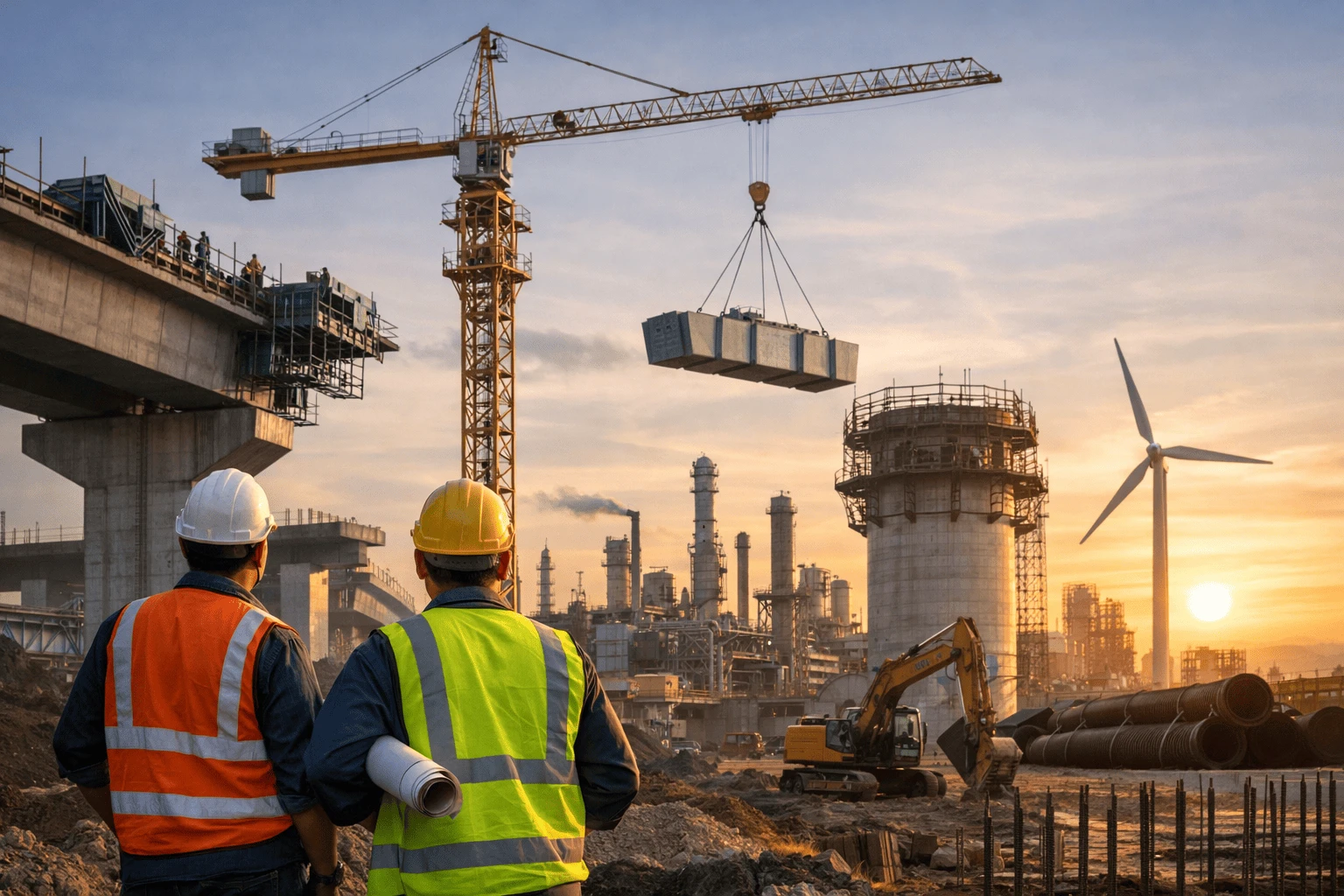
Industrial construction is entering a new era. Across the world, governments and private developers are investing heavily in infrastructure to support growing populations, expanding industries, and rapidly evolving technologies. From transportation networks and manufacturing plants to energy facilities and smart cities, modern infrastructure projects are becoming larger, more complex, and more technologically advanced than ever before.
Traditionally, industrial construction relied heavily on manual labor, long project timelines, and conventional building techniques. However, today’s infrastructure demands faster delivery, higher efficiency, and greater sustainability. As a result, the construction industry is embracing innovative solutions such as artificial intelligence, automation, digital modeling, and modular construction methods. These advancements are transforming the way infrastructure projects are planned, designed, and executed.
Another major driver behind this transformation is the increasing need for sustainable and resilient infrastructure. Governments worldwide, including those in the United Kingdom and emerging economies such as Pakistan, are focusing on environmentally responsible construction practices. Green materials, energy-efficient buildings, and climate-resilient infrastructure are becoming key priorities in modern development projects.
At the same time, digital technologies are helping construction companies improve project management, reduce costs, and minimize delays. Tools like Building Information Modeling (BIM), digital twins, and predictive analytics are enabling project teams to make smarter decisions throughout the construction lifecycle.
In this rapidly changing environment, understanding the latest industrial construction trends transforming infrastructure is essential for developers, contractors, policymakers, and investors. These trends are not only improving efficiency and productivity but are also shaping the future of infrastructure development globally.
Industrial construction is undergoing a major transformation as digital technologies reshape how infrastructure projects are designed, managed, and delivered. From advanced software tools to intelligent machines, digital innovation is helping construction companies complete projects faster, reduce costs, and improve overall project quality. These technologies are not just improving efficiency—they are fundamentally changing how modern infrastructure is built.
As governments and private investors continue to push for smarter infrastructure, digital solutions are becoming essential in large-scale industrial construction projects.
Artificial Intelligence (AI) is becoming one of the most influential technologies in the construction industry. AI-powered systems can analyze large amounts of project data, helping construction teams make better decisions before and during the building process.
For example, AI can predict potential project delays, identify safety risks, and optimize construction schedules. This allows project managers to address problems before they become costly issues. In large industrial infrastructure projects such as factories, energy plants, and transportation systems, this predictive capability can save millions in unexpected costs.
Automation is also playing a growing role in construction sites. Robots and automated machinery can perform repetitive or dangerous tasks such as bricklaying, welding, and material handling. These technologies help improve productivity while also enhancing worker safety.
In countries like the United Kingdom, automation is already being used in major infrastructure projects, while emerging economies are gradually adopting these technologies to improve construction efficiency.
Another powerful innovation transforming industrial construction is Building Information Modeling (BIM). BIM is a digital representation of a building or infrastructure project that allows engineers, architects, and contractors to collaborate more effectively.
Instead of relying on traditional blueprints, BIM creates a 3D model that includes detailed information about materials, structural components, and project timelines. This digital model helps teams visualize the entire project before construction even begins, reducing design errors and improving coordination among different stakeholders.
Digital twins take this concept even further. A digital twin is a virtual replica of a physical infrastructure asset, such as a bridge, power plant, or manufacturing facility. Sensors and real-time data allow engineers to monitor the performance of infrastructure systems and detect maintenance issues early.
Data is becoming one of the most valuable resources in modern industrial construction. With the help of advanced analytics and cloud-based platforms, construction companies can collect and analyze large volumes of project data to improve decision-making.
Predictive analytics can help identify potential risks, forecast project timelines, and optimize resource allocation. This means companies can plan infrastructure projects more accurately and reduce unexpected delays or cost overruns.
Data-driven construction is also improving transparency between stakeholders. Governments, investors, engineers, and contractors can access shared project data in real time, which improves communication and accountability throughout the construction process.
As infrastructure projects become more complex, the ability to use data effectively will play a critical role in shaping the future of industrial construction.
Sustainability and speed are now two of the biggest priorities in industrial construction. Infrastructure projects are no longer judged only by how large or impressive they are. Today, they are also measured by how efficiently they use resources, how quickly they can be delivered, and how well they respond to environmental challenges. This is why sustainable and modular construction methods are playing such an important role in transforming infrastructure across the world.
For developers, contractors, and governments, the goal is clear: build faster, reduce waste, lower emissions, and create infrastructure that can perform well for decades. That shift is changing both the materials used in construction and the way projects are assembled.
Modular and prefabricated construction is becoming one of the most important industrial construction trends in modern infrastructure development. Instead of building everything from the ground up on-site, many components are now manufactured in controlled factory environments and then transported to the construction site for assembly.
This method offers several major benefits. First, it speeds up project delivery. Since site preparation and component manufacturing can happen at the same time, overall timelines become shorter. This is especially useful for industrial facilities, warehouses, healthcare units, schools, and transport-related infrastructure where time is often a critical factor.
Second, modular construction can improve quality. Factory-built components are produced under more controlled conditions, which reduces errors and material waste. It also lowers the chances of weather-related delays, a common problem in traditional construction.
Third, prefabrication can help reduce labor pressure on-site. In many regions, the construction industry is facing skilled labor shortages. Modular methods help companies do more with smaller on-site teams while maintaining productivity. In both developed markets like the UK and developing regions looking to scale infrastructure quickly, this approach is becoming more attractive.
Another major trend reshaping industrial construction is the use of green materials and low-carbon building strategies. As climate concerns grow, infrastructure planners are under pressure to reduce the environmental impact of construction projects. This includes cutting carbon emissions, lowering energy use, and choosing materials that are more sustainable over the long term.
Traditional construction materials such as concrete and steel remain essential, but the industry is now exploring cleaner alternatives and smarter ways to use them. Recycled steel, low-carbon concrete mixes, energy-efficient insulation, and sustainable finishing materials are becoming more common in industrial and infrastructure projects.
The focus is also shifting toward whole-life performance. Instead of thinking only about the cost of building an asset, project teams are considering how much energy it will use, how often it will need repairs, and how it will perform over its full lifespan. This mindset supports net-zero goals and helps governments make better infrastructure investments.
In practical terms, green construction is no longer just a branding exercise. It is becoming a competitive advantage. Companies that can deliver energy-efficient, environmentally responsible projects are more likely to meet future regulations, attract investors, and win public-sector contracts.
Modern infrastructure must do more than support economic growth. It must also handle rising urban populations, climate stress, and changing social needs. This is why resilient infrastructure is becoming such an important part of industrial construction planning.
Resilience means designing and building systems that can continue functioning during extreme weather, supply chain disruptions, energy shortages, or other unexpected events. For example, flood-resistant transport links, stronger drainage systems, reliable energy infrastructure, and heat-resistant building designs are all becoming more important in urban planning.
This trend is especially relevant for cities in regions facing climate pressure and rapid development. In Pakistan, for example, the need for stronger transport, water, and energy infrastructure continues to grow alongside urban expansion. In the UK, resilience is closely tied to decarbonization, public safety, and long-term infrastructure modernization.
Smart city planning also supports this shift. When digital systems, efficient materials, and resilient design come together, cities can operate more smoothly and recover faster from disruption. That makes infrastructure not only smarter, but also more dependable for the people and industries that rely on it every day.
Industrial construction is rapidly evolving, and these changes are fundamentally transforming how infrastructure is designed, built, and maintained. As global demand for modern infrastructure continues to grow, construction companies and governments are increasingly turning to innovative technologies and smarter building practices to meet these challenges.
Digital technologies such as artificial intelligence, automation, Building Information Modeling (BIM), and data-driven project management are helping construction teams work more efficiently than ever before. These tools allow engineers and developers to plan complex projects more accurately, reduce risks, and deliver infrastructure faster and more cost-effectively. As infrastructure projects become more sophisticated, digital innovation will remain a key driver of progress in the industrial construction sector.
At the same time, sustainability is becoming a central priority in construction planning. Green materials, low-carbon building strategies, and energy-efficient infrastructure are helping reduce the environmental impact of large-scale projects. Governments and organizations around the world are increasingly focused on building infrastructure that supports long-term climate goals while also providing economic value.
Perhaps most importantly, modern infrastructure must be resilient and adaptable. Cities and industries rely on infrastructure systems that can withstand environmental challenges, population growth, and technological change. By combining digital innovation, sustainable materials, and resilient design, industrial construction is helping create infrastructure that is stronger, smarter, and better prepared for the future.
For developers, contractors, policymakers, and investors, keeping up with industrial construction trends transforming infrastructure is no longer optional—it is essential. Organizations that embrace innovation and modern construction practices will be better positioned to deliver successful infrastructure projects in an increasingly competitive and rapidly changing world.

Hi, I’m Ahmed, a professional content writer and SEO specialist. I help businesses, brands, and websites create clear, engaging, and search-friendly content that attracts the right audience and drives results.
With a strong understanding of SEO, keyword research, blog writing, website content, and content strategy, I craft content that is not only well-written but also optimized to perform on search engines. My goal is to turn ideas into powerful words that build trust, improve visibility, and support business growth.
Whether you need blog posts, website copy, product descriptions, SEO articles, or content optimization, I can help create content that connects with readers and supports your online goals.
Walk into almost any building — a new-build home, a renovated flat, a commercial unit —
1 September 2026
Industrial diesel engines are essential to the functioning of many businesses, from sites of constru
20 August 2026
Poultry processing is serious business in South America. Although Brazil is the world's largest chic
7 August 2026
Be the first to share your thoughts
No comments yet. Be the first to comment!
Share your thoughts and join the discussion below.







.webp&w=3840&q=75)