
* All product/brand names, logos, and trademarks are property of their respective owners.
Tech careers are moving fast, and 2026 is shaping up to reward people who can prove practical skills, not just list them on a CV. The World Economic Forum’s Future of Jobs Report 2025 says employers expect major skill disruption by 2030, with technology trends, AI, digital access, and cybersecurity continuing to reshape hiring needs. That is a big reason certifications are becoming more valuable for job seekers, career changers, and working professionals who want better roles or stronger salaries.
In simple terms, a good tech certification can help you stand out in a crowded market. It shows employers that you have invested time in learning something useful and current. It can also make it easier to move into fast-growing areas like cloud computing, cybersecurity, data analytics, and AI. Major providers such as AWS, Microsoft, Google Cloud, CompTIA, and ISC2 continue to offer certification paths in exactly these areas, which reflects how strongly these skills matter in today’s market.
The good news is that not every valuable certification is meant only for senior professionals. Some are beginner-friendly and help people start in IT support, cloud, or cybersecurity without years of prior experience. Others are ideal for professionals who want to level up into architecture, security, automation, or AI-focused roles. In this blog, we’ll look at the best tech certifications that can boost career growth in 2026, why they matter, and how to choose the right one based on your goals, budget, and experience level.
The strongest tech certifications in 2026 are the ones tied to real hiring needs. Right now, cloud, cybersecurity, and data/AI continue to stand out because companies are still investing heavily in digital infrastructure, security, automation, and smarter decision-making. That is why certifications from providers like AWS, Microsoft, Google Cloud, and ISC2 keep getting attention from both employers and job seekers. AWS continues to position its certifications as a way to validate cloud skills, Microsoft keeps expanding role-based and AI-related credentials, Google Cloud offers certification paths for both entry-level and advanced learners, and ISC2 highlights cybersecurity certifications for different career stages.
Cloud certifications remain some of the most valuable choices because nearly every modern business relies on cloud platforms in some way. If someone wants to work in infrastructure, support, DevOps, architecture, or backend systems, cloud skills can open many doors. AWS offers multiple certification paths and exam prep resources for different levels, while Microsoft’s Azure Fundamentals is a strong beginner option for learning cloud concepts and core Azure services. Google Cloud also offers certifications that help prove technical ability across its products and solutions.
For beginners, Azure Fundamentals or entry-level cloud certificates can be a smart place to start. For more experienced professionals, AWS associate or professional-level certifications and Google Cloud professional credentials can carry more weight. These are especially useful for people targeting remote jobs, multinational companies, or fast-growing startups.
Cybersecurity is another major career-growth area because businesses cannot afford weak security practices. ISC2 says its certifications are recognized across all stages of a cybersecurity career, from entry-level to advanced leadership roles. Its Certified in Cybersecurity (CC) certification is especially useful for beginners because it does not require prior experience, while CISSP is better suited to professionals aiming for senior security and management roles.
This makes cybersecurity certifications attractive for both new entrants and experienced IT workers. Someone starting out can use a foundational credential to get noticed, while a working professional can use an advanced certification to move into governance, risk, architecture, or security leadership.
Data and AI certifications are becoming more important because employers want people who can work with insights, automation, and AI tools. Microsoft now highlights AI-focused credentials alongside its broader certification ecosystem, and Google Cloud offers training and certificates tied to areas like data analytics, cybersecurity, cloud computing, and cloud engineering. Google Cloud’s training platform also emphasizes hands-on learning, skill badges, and machine learning preparation.
For career growth in 2026, this matters a lot. A candidate with cloud knowledge plus analytics or AI skills often looks more future-ready than someone with only general IT knowledge. In simple terms, the best certifications are the ones that match where tech jobs are heading, and right now that clearly includes cloud, cyber, and AI-driven work.
Choosing a certification is not just about picking the most famous name. The smarter move is to match the certificate with your current skill level, the type of job you want next, and the amount of time and money you can realistically invest. In 2026, there are more options than ever, from beginner-friendly credentials to advanced, role-based certifications in cloud, security, and AI. Microsoft says its Fundamentals certifications are designed to give a practical high-level overview of Microsoft technology, while AWS offers both foundational and advanced paths, and Google continues to promote job-ready certificates in high-growth areas like IT Support and Data Analytics.
If you are new to tech, start with something that builds confidence and gives you a clear entry point. Good beginner choices include Google IT Support, Google Data Analytics, Microsoft Fundamentals certifications, and ISC2’s Certified in Cybersecurity (CC). Google presents its IT Support certificate as preparation for entry-level IT support roles, and its Data Analytics certificate as a way to build practical skills for data work. ISC2 also states that its CC certification does not require prior experience, which makes it especially attractive for career changers and fresh graduates.
If you already work in IT, it usually makes more sense to choose a certification that helps you move into a higher-value role. For example, AWS positions Solutions Architect Associate as a solid next step for candidates with AWS Cloud or strong on-premises IT experience, while Solutions Architect Professional is aimed at advanced solution design, cost optimization, security, and automation. That means your best choice depends on whether you are trying to enter tech or level up inside it.
A useful certification should do one of three things: help you get hired faster, help you switch into a stronger field, or help you qualify for better-paying roles. Expensive does not always mean better. A lower-cost or beginner certificate can still offer strong value if it helps you land your first role. On the other hand, a more advanced credential can be worth the higher exam fee if it supports promotion into cloud architecture, cybersecurity, or senior engineering work. AWS, for example, lists different certification levels, while Microsoft and Google offer broader learning ecosystems that can help people build skills step by step instead of jumping straight into advanced exams.
The real ROI comes from alignment. A cloud certificate is usually a stronger investment for someone targeting cloud support, DevOps, or architecture roles. A security certificate makes more sense for someone aiming at SOC, compliance, or risk-related work. A data or AI certificate is often better for analysts, business intelligence roles, and people moving toward automation-focused jobs. When the certification matches the job path, the return is usually much clearer.
Another smart factor is where you will study. Google Career Certificates are hosted on Coursera and cover fields such as IT Support, Data Analytics, Cybersecurity, Project Management, and UX Design. Microsoft Learn offers official training, credentials, and scenario-based Applied Skills. AWS has its own certification hub and exam guides for foundational, associate, professional, and specialty paths. These official platforms are often the safest choice because the content stays closest to the exam objectives.
In simple terms, the right certification is the one that fits your career stage and your next move. Beginners should focus on entry-level, job-ready credentials. Experienced professionals should target role-based certificates that strengthen authority in cloud, cybersecurity, AI, or architecture. When you choose based on career direction instead of hype, your certification becomes a real growth tool rather than just another badge.
Technology careers are evolving faster than ever, and staying competitive in 2026 means continuously upgrading your skills. One of the most practical ways to do that is through industry-recognized tech certifications. Whether you are just starting your journey in IT or already working in the industry, the right certification can help you validate your skills, stand out to employers, and unlock better job opportunities.
Throughout this guide, we explored some of the most valuable certification paths for the coming years. Cloud certifications from platforms like AWS, Microsoft Azure, and Google Cloud remain highly valuable because businesses are moving more infrastructure and services to the cloud. Cybersecurity certifications are also growing in demand as companies face increasing digital threats and need skilled professionals to protect their systems. At the same time, certifications in data analytics and artificial intelligence are becoming essential because organizations now rely heavily on data-driven decisions and automation.
However, the best certification is not necessarily the most popular one — it is the one that aligns with your career goals. Beginners may benefit from entry-level certifications such as IT support, cybersecurity fundamentals, or data analytics programs. These can help you break into the industry and gain foundational experience. On the other hand, professionals with existing IT knowledge may want to pursue advanced certifications in cloud architecture, security leadership, or AI technologies to move into higher-paying and more specialized roles.
Another important factor is choosing a reliable learning platform. Official training programs from providers like AWS, Microsoft Learn, Google Career Certificates, and reputable online learning platforms can help you prepare effectively for certification exams. Many of these programs also offer hands-on labs, real-world projects, and guided learning paths, which make it easier to build practical skills that employers value.
Ultimately, investing in the right tech certification can significantly boost your career growth. It demonstrates your commitment to learning, proves your expertise in high-demand technologies, and increases your chances of landing better roles in the global tech job market. If you are planning your next career move in 2026, now is the perfect time to choose a certification path that aligns with your interests and future goals.
Take action today: Research the certifications that match your career ambitions, start learning through trusted platforms, and take the first step toward building a stronger and more future-ready tech career.

Hi, I’m Ahmed, a professional content writer and SEO specialist. I help businesses, brands, and websites create clear, engaging, and search-friendly content that attracts the right audience and drives results.
With a strong understanding of SEO, keyword research, blog writing, website content, and content strategy, I craft content that is not only well-written but also optimized to perform on search engines. My goal is to turn ideas into powerful words that build trust, improve visibility, and support business growth.
Whether you need blog posts, website copy, product descriptions, SEO articles, or content optimization, I can help create content that connects with readers and supports your online goals.
The American apparel market thrives on individuality, premium quality, and brand identity. From
26 September 2026
Security problems can affect a business without warning. An unauthorized person may enter a facility
8 September 2026
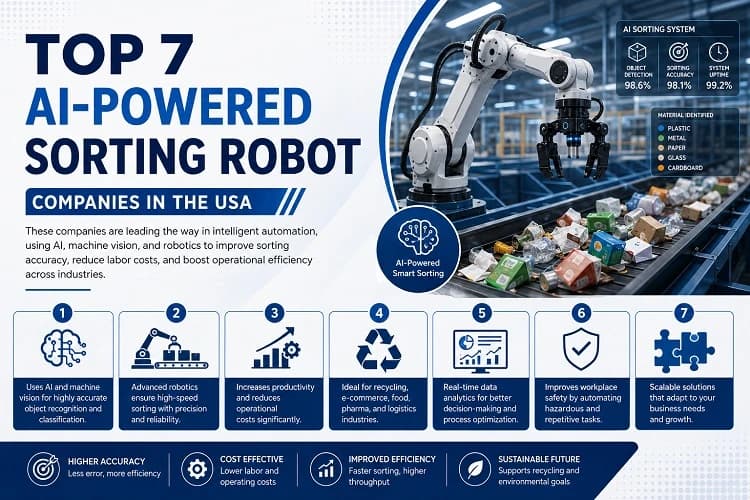
The revolution of AI-powered sorting robots is reshaping recycling, logistics, manufacturing, and ma
21 August 2026
Be the first to share your thoughts
No comments yet. Be the first to comment!
Share your thoughts and join the discussion below.




.webp&w=3840&q=75)